
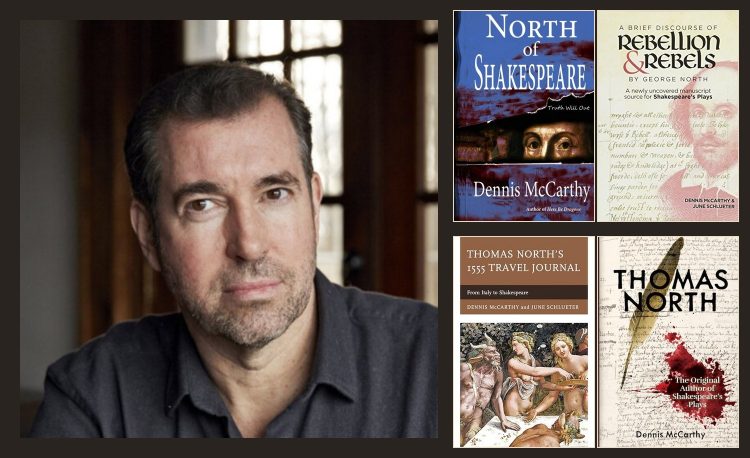
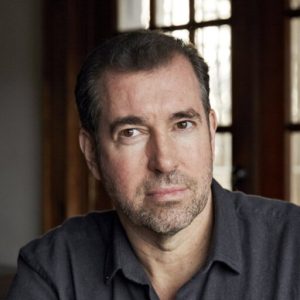
On May 1, 2021, I hosted a live session for the John Chappell Natural Philosophy Society with Dennis McCarthy. A few of our members asked me why a society devoted to physics and natural philosophy was spending two hours on Shakespeare. My answer was simple: critical thinking doesn’t stay inside one discipline. And Dennis’s story is one of the best examples I know of what happens when an outsider brings new tools and a fresh set of eyes to a question the experts consider closed.
Dennis believes he has found the man behind Shakespeare’s plays. Not a secret author hiding behind Shakespeare’s name, but the writer of the original plays that Shakespeare reworked for the London stage. That man is Sir Thomas North.
A Scientist Turns to Shakespeare
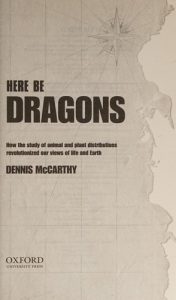
Dennis is an independent researcher who has published in geophysics, biogeography, and English literary history. Some readers may already know him from his work on Earth expansion. His first book, Here Be Dragons, was published by Oxford University Press in 2009. It shows how the distributions of plants and animals across the globe record the history of the Earth itself.
Dennis doesn’t have a PhD. He left the University at Buffalo a few credits short of a degree. Like many of the people we feature on this site, he is what the journalist Michael Blanding calls a “rogue scholar,” someone working outside the academy who is willing to follow the evidence wherever it leads.
What fascinates me is that Dennis came to Shakespeare through science. Biogeography is about tracing how things spread, diverge, and leave traces of a common origin. In late 2005 he decided to apply that same way of thinking to the history of an idea, and he picked Hamlet as his test case. As he followed the play’s sources back through time, he kept arriving at the same man.
Who Was Thomas North?
Sir Thomas North (1535 – c.1604) was an Elizabethan courtier and translator. Every Shakespeare scholar knows his name, but only for one thing: his 1579 English translation of Plutarch’s Lives. It is the acknowledged source of Julius Caesar, Antony and Cleopatra, and Coriolanus, and Shakespeare often follows North’s words nearly verbatim.
But nobody had looked any further. As Dennis told us in our 2021 session, before he came along “there was no such thing as a Thomas North scholar.” No one had compared North’s other translations, his style, or his unpublished manuscripts with the rest of the plays.
Plagiarism Software Meets the Bard
Dennis’s main tool is surprisingly modern: WCopyfind, free plagiarism-detection software of the kind teachers use to catch students copying essays. He combines it with Early English Books Online, a database of almost everything printed in English before 1700.
The method is careful. First, find clusters of words, not single words, shared by North and Shakespeare. Then search the database to see whether anyone else of the period used the same cluster. If a phrase turns up only in North and in Shakespeare, that points to direct borrowing, not common speech. Finally, check whether the borrowed words appear in the same order, which is very unlikely to happen by chance.
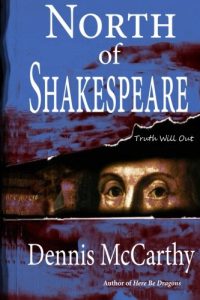
Dennis laid out the early results in his 2011 book North of Shakespeare, and then began publishing the evidence one claim at a time in peer-reviewed journals such as Notes and Queries and Shakespeare Survey.
The Manuscript That Made the Front Page
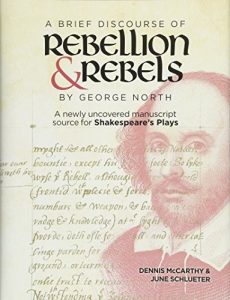
The discovery that put Dennis in the headlines started with an old auction catalogue from 1927. It described an unpublished essay by George North, a relative of Thomas, written at the North family home. After about a year of searching, Dennis and his collaborator June Schlueter, professor emerita of English at Lafayette College, tracked the manuscript down in the British Library.
When Dennis ran it through WCopyfind, he found passages from the manuscript reworked in roughly eleven of Shakespeare’s plays. In one striking example, the words “proportion,” “glass,” “feature,” and “fair” from North’s dedication appear in nearly the same order in the famous opening soliloquy of Richard III: “Now is the winter of our discontent.”
The story ran on the front page of The New York Times in February 2018. That same year Dennis and June published the full manuscript as A Brief Discourse of Rebellion and Rebels with D. S. Brewer. Even skeptics now accept that Shakespeare read it. It also shows that whoever wrote the plays had access to the North family’s private library.
A Journey to Rome in 1555

As a young man, Thomas North travelled to Rome as part of the 1555 embassy Queen Mary sent to Pope Paul IV, and his diary of the journey survives. In 2021 Dennis and June published it as Thomas North’s 1555 Travel Journal: From Italy to Shakespeare with Fairleigh Dickinson University Press. They argue that two of the late plays, Henry VIII and The Winter’s Tale, grew out of plays North wrote soon after that trip.
Thirty Plays and a Missing Playwright
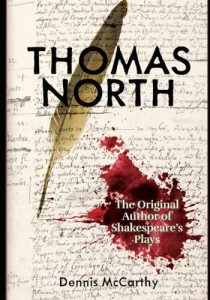
Dennis pulls the whole case together in his 2022 book Thomas North: The Original Author of Shakespeare’s Plays. There he argues that North wrote more than thirty plays between 1556 and 1604, many of them for the Earl of Leicester’s players, the leading acting company of the 1570s, long before Shakespeare arrived in London.
The obvious objection is that there is no proof North wrote plays at all. Dennis answers with documents. A 1560 preface by Jasper Heywood names North among the tragedy writers of the Inns of Court. And the household account book of North’s brother Roger records payments to Leicester’s players and, on the same occasions, to “my brother.”
You can read the full argument, the evidence play by play, and the criticisms on the Thomas North Theory page of the Natural Philosophy Wiki.
Silence Instead of Refutation
This is where Dennis’s story will sound very familiar to readers of Beyond Mainstream. Mainstream Shakespeare scholars agree that source plays existed, and they agree that Shakespeare read North. What they won’t accept is that a single, named author wrote those source plays. As of today, no published computational study has independently tested Dennis’s parallels, either for or against. For the most part, the response has been silence.
To get past the gatekeepers, Dennis did what many of our own scientists have learned to do: publish one narrow claim at a time. A paper about one play gets accepted. A paper claiming the whole canon makes editors uncomfortable. Cynthia Whitney, one of our own contributors, follows the same strategy in physics, keeping each paper to a single point. Whether the field is physics or Shakespeare, the pattern is the same.
I don’t know whether every one of Dennis’s claims will hold up. But I do know that when someone brings real evidence, real documents, and a testable method, the right response is to engage with it, not ignore it. That is what Beyond Mainstream is all about.
Watch Our 2021 Session
Learn More
On the Natural Philosophy Wiki:
- Dennis J McCarthy: biography, books, and papers
- Thomas North: the man himself
- Thomas North Theory: the full argument, the evidence, and the criticisms
- June Schlueter: Dennis’s collaborator
- North by Shakespeare: Michael Blanding’s book about Dennis’s search
From Dennis himself:
- sirthomasnorth.com: Dennis’s website, with a timeline of North’s proposed plays
- All the Mysteries That Remain: Dennis’s Substack

About the Author