
Scientist Profile


For decades, David hung out with some of the best scientific critical thinkers on the planet. Throughout the years there were some very important “eureka” moments as David collected what he called the best of the best ideas and concepts. During this time, David gave talks at the NPA and CNPS conferences, always stating up front that he did not have a theory or model of the universe of his own.
But then one day in 2015, David was at a meeting at his father’s house with a friend, where his dad was giving a talk on his work on gravity. David sat there listening to his father’s presentation when a slide came up on the screen that turned out to be one of the biggest scientific “eureka” moments of David’s life.
His father calmly explained something he had developed a few months earlier on what he called “how to make waves with particles.” David jumped up from the couch, startling everyone. He frantically paced around the living room muttering to himself, and finally turned to his father and said: “You found a solution to one of the most important problems in physics.”
His dad didn’t quite understand, but two weeks later he came to David and said: “I think I came up with a solution to the wave/particle duality problem!”
Months later, David put every previous eureka moment together with his dad’s solution, went to his dad and said: “We have to write a book!”
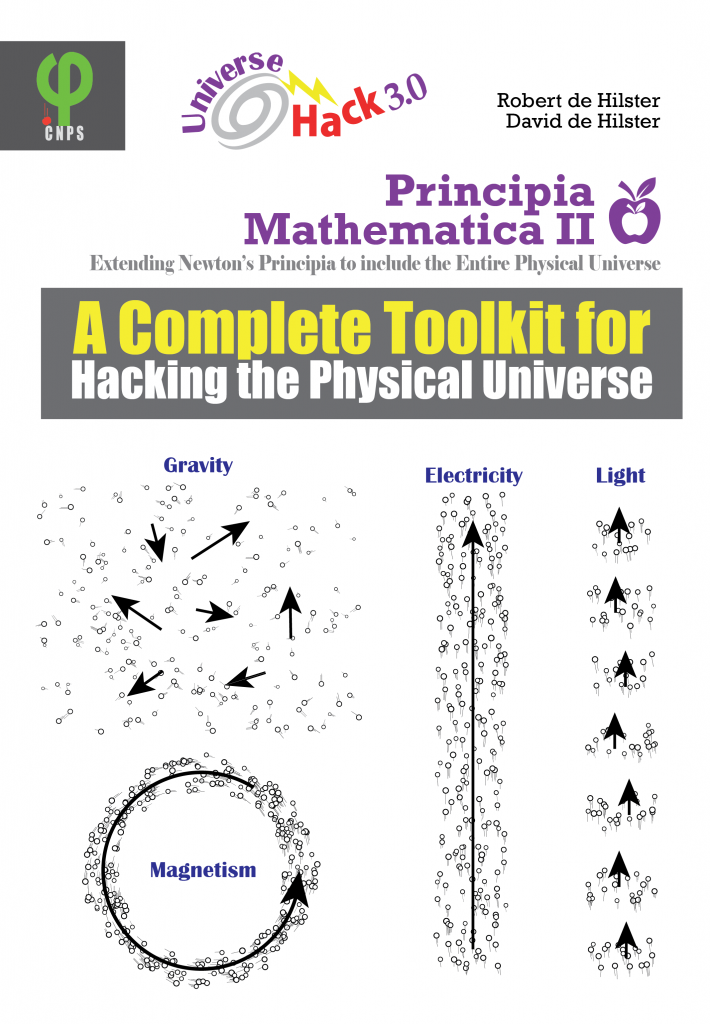
In August 2021, David and his father Robert “Bob” de Hilster published their book “Principia Mathematica 2” using their Particle Model. David is also the editor-in-chief, chief programmer and graphic artist for the online science magazine Science Woke.
David is one of those modern Renaissance men who can walk and work with the best in art, computers and science. Be sure to check out his YouTube channel “Dissident Science” as well as his entertaining feature-length documentary, “Einstein Wrong – The Miracle Year“.
Background
David de Hilster was born on Friday, November 13, 1959, in Ann Arbor, Michigan, while his father was studying at the University of Michigan, and grew up in Ohio. At Ohio State University he studied architecture and mathematics, then earned a master’s degree in linguistics, studying how to get computers to understand human language.
That led to a career of more than 30 years in artificial intelligence and natural language processing, from Battelle Memorial Institute to Rio de Janeiro to the AI groups at McDonnell Douglas and TRW. In 1999, with Amnon Meyers, he became one of the creators of the VisualText programming environment and co-author of the computer language NLP++. In January 2025 he became an adjunct professor at Northeastern University’s Miami campus, and he paints professionally too, having shown in the young-artist galleries of the Los Angeles County Museum of Art.
Key Ideas and Work
David’s road into dissident science began in 1992 in his Long Beach artist loft, when he met the Argentine physicist Dr. Ricardo Carezani, who argued that Einstein’s special relativity was wrong. David put Carezani’s work on the internet and helped found the Society for the Advancement of Autodynamics to promote it. In 1996 he found the Natural Philosophy Alliance (NPA), where he met many of the scientists whose ideas would later feed into the Particle Model.
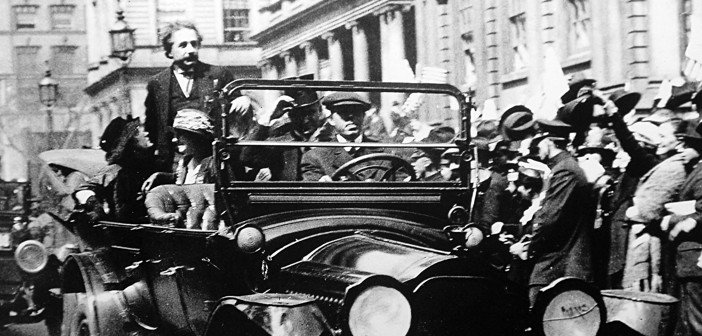
In 2005, the 100th anniversary of Einstein’s “miracle year,” he raised money for his documentary Einstein Wrong – The Miracle Year, with seed money from GPS expert Ron Hatch. In the film, David takes his mother, Pat, around the country to meet scientists working outside the mainstream who dispute Einstein, the Big Bang and plate tectonics. It premiered in Long Beach in December 2013.
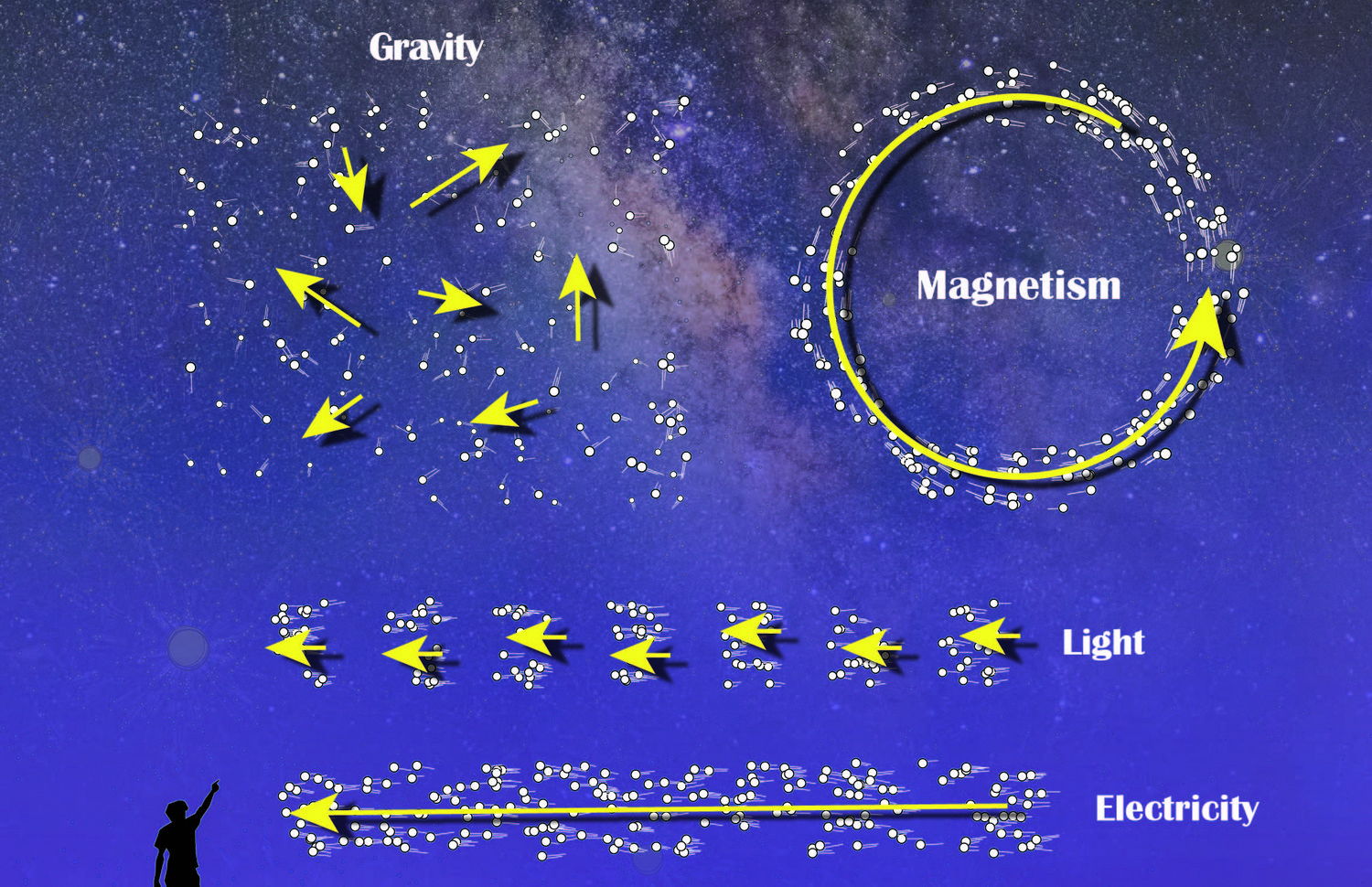
The Particle Model, built with his father, aims to describe the whole universe with a small number of real particles following Newtonian mechanics. In Principia Mathematica 2 they present what they claim is the first complete physical model of the known universe, followed by a second book, The Four Universal Motions in Physics. Among those motions is “luminic” motion, David’s name for his father’s picture of light as waves of particles arriving “like successive waves of bombers.”
Unusually, David is one of the most persistent critics of the aether from inside the dissident community. His central objection is what he calls the “container problem”: every real medium that carries waves is held together by something, but nothing holds an aether together in space. “What contains the luminic aether in space?” he asks. “There is no answer.” Luminic motion, he argues, explains light without one. He has aimed this criticism even at friends such as Glenn Borchardt, whose Infinite Universe Theory defends an aether.
Behind the scenes, David has been the webmaster, conference director and, since 2015, president of the John Chappell Natural Philosophy Society (CNPS), which grew out of the NPA in 2014. In 2026 he led its re-formation as the Natural Philosophy Research Institute (NPRI), where he is president and editor-in-chief of its new peer-reviewed Natural Philosophy Journal. He also co-founded the Natural Philosophy Wiki and founded Beyond Mainstream Science.
Read More
Here are some links to get to know about David and his works:
- http://principiamathematica2.com (book)
- http://www.dehilster.com (personal blog)
- http://www.dissidentscience.com (YouTube Channel)
- http://wiki.dehilster.com (science biography)
- http://www.einsteinwrong.com (his documentary film)
- http://samba.dehilster.com (cultural biography)
Read more on the CNPS Wiki.