
Scientist Profile


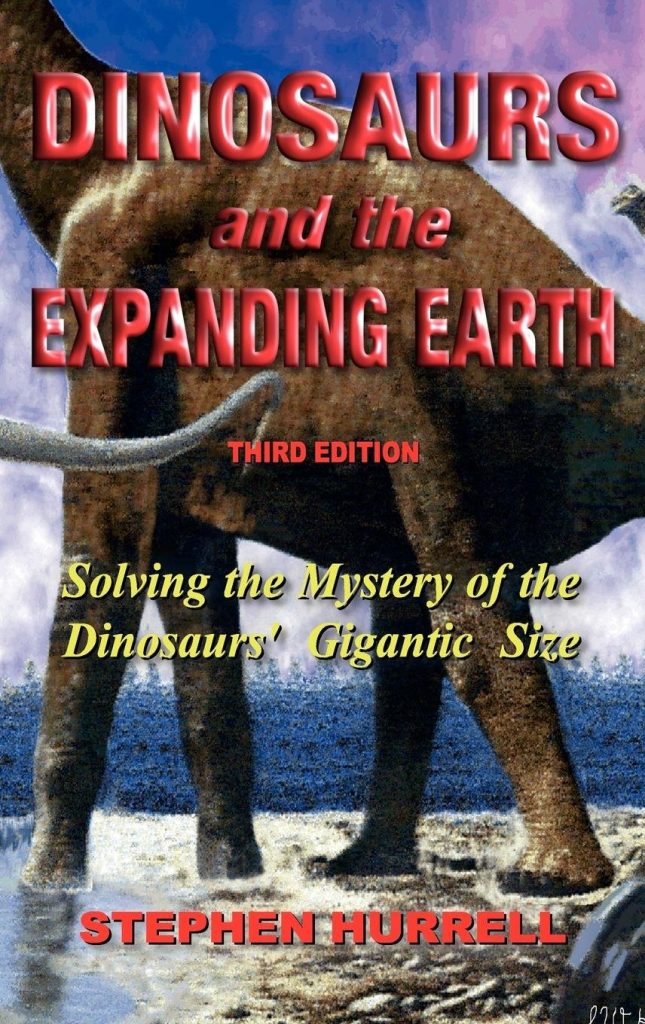
Imagine you were given a job to take mechanical parts for machines and double them in size. Sounds innocent enough. Now imagine this leading you to write a book entitled “Dinosaurs and the Expanding Earth“. How did THAT happen?
Well, that is exactly where Stephen Hurrell, a mechanical engineer from the UK, found himself when he was given the task of doubling the size of mechanical parts for a particular project. When he realized that the weight would not double, but would actually increase eight times, he got to thinking about dinosaurs and their size, and why we don’t have huge land animals today.
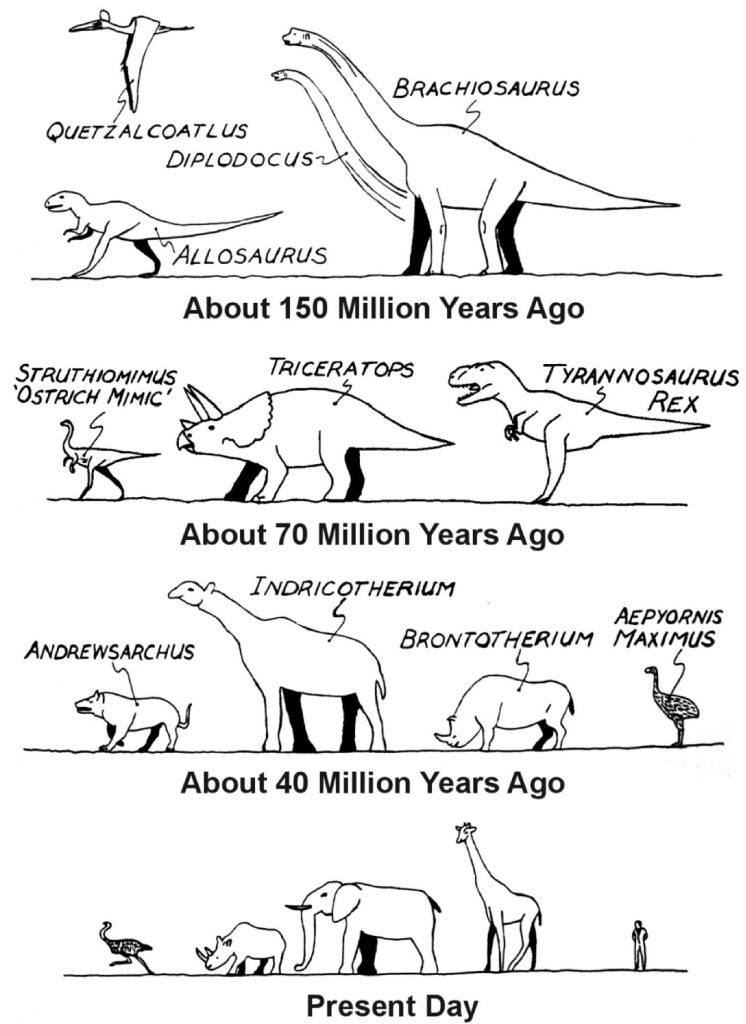
After many calculations, investigating the size of the largest land creatures over millions of years, Stephen came to a shocking conclusion: all the evidence pointed to the hypothesis that the earth’s gravity was weaker millions of years ago, and that gravity has been getting stronger over time. Stephen went to the library (no internet in those days) and found scientists who were showing evidence that the earth is in fact expanding. Now Stephen had found evidence that it was not only expanding, but gaining mass.
That, as scientist and artist Neal Adams would say, “changes EVERYTHING”.
Background
Stephen W. Hurrell was born in Great Britain in 1956 and lives in Ellesmere Port, Cheshire. He worked in a series of mechanical engineering design jobs, and it was his work at the UK’s Electricity Research Centre, designing and testing scale models of engineering structures, that gave him his original insight.
The key is a simple rule of scale. A structure’s strength grows with its cross-section (the square of its size), but its weight grows with its volume (the cube of its size). So you can’t simply enlarge something without it becoming relatively weaker. Applying that engineering logic to dinosaurs, Hurrell concluded that the largest of them could not have been held up by their own skeletons under today’s gravity.
Hurrell is a named inventor on several British patents from his engineering career. Now retired from engineering design, he writes about ancient gravity and Earth expansion on his website, dinox.org.
Key Ideas
Hurrell’s Reduced Gravity Earth theory says that, for a given form of life, the size of land creatures is inversely proportional to the strength of gravity. Today’s land animals are built right up to the limits our gravity allows. The giants of the fossil record, from sauropods and Tyrannosaurus rex to the giant pterosaur Quetzalcoatlus, enormous dragonflies and giant scorpions, appear on engineering analysis to have bones, muscles and wings too weak for their size, if they lived in gravity like ours.
Instead of inventing special explanations for dinosaur bodies, Hurrell asks: what gravity would make these animals perfectly ordinary? His answer is that ancient gravity would need to be roughly half today’s value to explain the largest dinosaurs, and that it has risen slowly and steadily since.
What makes his work distinctive is that he treats ancient gravity as something you can measure. He has developed several independent methods to estimate it:
- comparing fossil trackways with the rules that govern walking and running;
- comparing the strength of fossil leg bones with the weight they carried;
- applying known limits for ligaments and tendons;
- working out the blood pressure a long-necked sauropod would need to pump blood to its head;
- and, since 2014, using fossil feathers to constrain the gravity in which a creature flew.
He argues that the consistency of his results, across different animals, ages and methods, is the strongest sign that a real effect is being measured.
The Expanding Earth Connection
Geologists working from completely different evidence, such as how the continents fit together and sea-floor spreading, had already concluded that the ancient Earth was smaller. Hurrell notes that his gravity values point to an ancient Earth of similar size, so two separate lines of reasoning arrive at the same picture.
Importantly, he finds that an Earth that simply swells at fixed mass doesn’t fit the fossils, since that would make ancient gravity stronger, not weaker. An Earth that gains mass as it grows does fit. This puts his work right alongside that of James Maxlow, and in the tradition of Samuel Warren Carey, who added a section on dinosaurs to his book Earth Universe Cosmos after reading Hurrell’s work.
His key works include Dinosaurs and the Expanding Earth (first published 1994, third edition 2011) and The Hidden History of Earth Expansion (2020), which he edited and which recovers the forgotten history of the expansion idea.
Read more on the CNPS Wiki.