Scientist Profile


You are a German physicist taking on the biggest names in particle physics, and when the Higgs boson is supposedly discovered, you write a book entitled “The Higgs Fake“. You are obviously looking for trouble, right? Not necessarily.
It turns out that a great many physicists and engineers are not buying everything particle physics is selling, and they are the audience for this book as well as for Unzicker’s other work and writings. In “The Higgs Fake“, Unzicker says the book “is written for the young scholar who wants to dig into the big questions of physics, rather than dealing with a blend of mythology and technology.”
Alexander is a science writer, author, scientist and lecturer who is not afraid to challenge mainstream physics in order to find a greater truth. Where many physicists may not be buying what theoretical physics and cosmology are selling, Unzicker has made it his mission not only to expose where physics may be rotten, but to propose new directions and places scientists have not looked.
Background
Alexander Unzicker was born in Munich, Germany, in 1965, and is the son of the chess grandmaster Wolfgang Unzicker. He studied both physics and law at Ludwig Maximilian University of Munich, earning a physics diploma and passing the state law examination in 1993. He later qualified to teach mathematics and physics, and in 2001 earned a doctorate in the neurosciences, also at Munich.
Alongside his writing, he has taught mathematics and physics at the Pestalozzi-Gymnasium in Munich. He says his mix of law, neuroscience and classroom teaching gives him a broad, historical view of physics, and he urges young physicists to go back to the original papers, because “the greatest pearls of physics are in articles from 50 years ago.”
Key Ideas
Unzicker’s own research centres on Mach’s principle: Ernst Mach’s idea that a body’s inertia is not built into it, but is set by all the matter in the universe. Building on work by Dennis Sciama and Robert Dicke, Unzicker argues that general relativity can be rewritten as a theory in which the speed of light varies with gravity, instead of a theory of curved spacetime. He shows that such a description reproduces the classic tests of general relativity.
He traces the idea back to Einstein himself. In 1911, before adopting curved spacetime, Einstein treated gravity as a varying speed of light. Unzicker believes this was the more physical of Einstein’s two routes and was abandoned too soon.
He is also a sharp critic of the standard model of particle physics, string theory, supersymmetry and cosmic inflation, which he sees as untestable and overloaded with free parameters. In his view, a truly fundamental theory should explain the constants of nature, not keep adding new ones.
Books
Dr. Unzicker’s books are a must-read for everyone trying to be science woke. In them, Alexander does not hold back on his criticisms of particle physics and science in general.
- Bankrupting Physics: How Today’s Top Scientists are Gambling Away Their Credibility (2013), written with Sheilla Jones, describes how science spends billions of dollars yet still cannot answer fundamental questions that troubled Einstein, Dirac and Feynman. Its German original, Vom Urknall zum Durchknall (2010), was honoured as science book of the year by the magazine Bild der Wissenschaft.
- The Higgs Fake (2013), his most polemical book, takes on the supposed “finding of the century”: the claimed discovery of the Higgs boson at CERN’s Large Hadron Collider. Unzicker documents what he sees as the precarious and disjointed process behind the “invention” and discovery of the particle.
- Einstein’s Lost Key (2015) is about a variable speed of light, something blasphemous to Big Physics, yet something Einstein clearly explored.
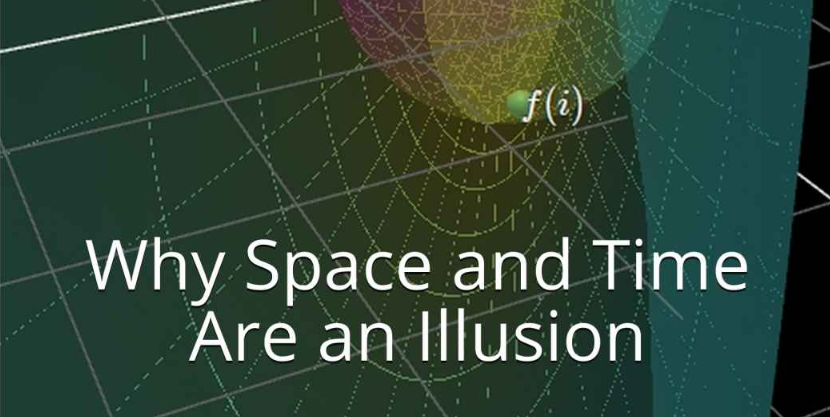
- The Mathematical Reality: Why Space and Time Are an Illusion (2020) argues that physics has become over-mathematised and detached from measurement.
Recognition
His YouTube channel, Unzicker’s Real Physics, has become his biggest platform, with hundreds of videos and millions of views. Remarkably, he has interviewed physicists from the very mainstream he criticises, including Nobel laureates David Gross, Barry Barish and Anne L’Huillier, as well as dissident researchers such as Pierre-Marie Robitaille. Mainstream reaction to his work is largely hostile, but his books have reached a wide audience.
Links
Fortunately for us, Dr. Unzicker has a website and YouTube channel where he chronicles his work, interviews and lectures. We are also proud to count him as one of our regular contributors to Science Woke, the online magazine for critical thinkers.
- Dr. Unzicker’s Website: http://www.alexander-unzicker.com
- His YouTube Channel: http://www.youtube.com/c/TheMachian
Read more on the CNPS Wiki.