
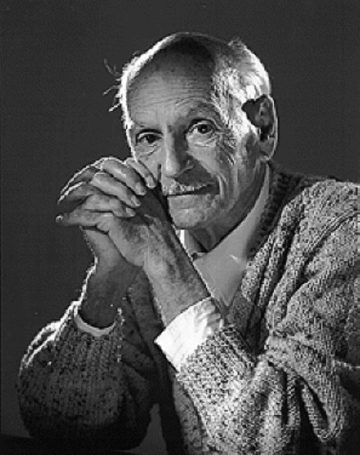
Scientist Profile
Ricardo Libertario Carezani (April 11, 1921 – 2016) was an Argentine-American physicist and the discoverer of Autodynamics (AD), a theory he proposed as a replacement for Einstein’s special and general relativity.
Carezani was led to his theory after finding what he saw as a mistake in the work of Lorentz and Einstein. He concluded that the “two observers in relative motion” postulate from which special relativity is derived was redundant. Eliminate that redundancy, he argued, and a new theory appears in which a single observer describes a “phenomenon” in its own coordinate system.
Background
Carezani was born in Córdoba, Argentina. His family moved to Tucumán in 1931 so he could attend the city’s schools, and by 1935 he was teaching himself algebra and calculus alongside the literary classics. In 1939 he entered Tucumán University to study electro-mechanical engineering.
From the outset he considered Einstein’s Special Theory of Relativity to be ill-founded, and his objection dates from his first year at university, around 1940. By the age of 24 he had developed the foundations of Autodynamics. In 1947 he received his doctorate in physics from Tucumán University.
Dr. Carezani’s theory is intimately linked to his personal life. To understand Carezani is to understand Autodynamics, and knowing this helps answer one of the most frequently asked questions about it: why did it take so long to develop?
In 1951 he published a book on Autodynamics which, he said, was immediately blacklisted by Argentina’s National Atomic Energy Commission. Only about 300 copies were printed. In August 1954 the Buenos Aires daily newspaper Crítica (which ceased publication in 1963) published an account of his theory. Carezani recounted that the paper’s publisher was then warned not to print anything further by him or face being shut down.
Born into a totalitarian government in Argentina, and trying to promote a new theory of relativity to replace that of the “god” Einstein, Carezani found his struggle to be both geographic and political. It kept him from getting existing data that might help confirm his theory, and from getting the theory published. In his own words, he fought Perón on one side and the Einstein “myth” on the other.
After Argentina’s political reopening, Carezani emigrated to the United States around 1979–1981 and settled in California, where he worked as a mathematician and physicist. He lived and worked in Long Beach, California, until his death in 2016.
Key Ideas and Work
Autodynamics holds that removing the redundant reference frame from the Lorentz derivation (what supporters call the Carezani Frame Reduction) yields equations that do not blow up at the speed of light and require no relativistic increase in mass.
Notable results claimed for Autodynamics include:
- Nucleus–nucleus collisions explained without the neutrino
- A derivation of Bohr’s atomic equations without the use of wave equations
- A new Compton Effect equation, which Carezani regarded as the theory’s strongest result
- A particle-based (“pico-gravity”) mechanism of gravity that he claimed explains the perihelion advance of all bodies including binary stars, the apparent Pioneer slowdown, the Allais anomaly and lunar distancing
Carezani also doubted that the neutrino exists, and much of his later work, some of it with collaborator Lucy Haye, re-examined experiments such as Super-Kamiokande and the detection of Supernova 1987A.
In 1982 he authored an accelerator experiment at the Stanford Linear Accelerator Center designed to test Autodynamics against special relativity. The results, published in Physical Review A in 1984 as the “Calorimetric Test of Special Relativity“, agreed with mainstream physics rather than with his predictions. Carezani responded by restricting the theory to decay processes, holding that a particle accelerated by an external field falls outside its scope.
A few of his papers appeared in Physics Essays. His books include Autodynamics: Fundamental Basis for a New Relativistic Mechanics (1998) and Autodynamics: Storm in Physics (2005).
Recognition
In 1994 the Society for the Advancement of Autodynamics was founded by one of Carezani’s supporters, David de Hilster, together with Carezani and Amnon Meyers. The society, which later had a chapter in the United Kingdom, maintains a website at autodynamics.org. In June 2015 the society placed a paid advertisement promoting Autodynamics in the Science Times section of The New York Times, which drew a critical response in Physics Today.
Read more on the CNPS Wiki.
